The digital world has transformed almost every part of modern life. People use the internet to communicate, work, study, shop, manage bank accounts, store photographs, run businesses, and access essential services. Companies depend on cloud platforms, mobile applications, artificial intelligence, online payments, and connected devices to operate efficiently.
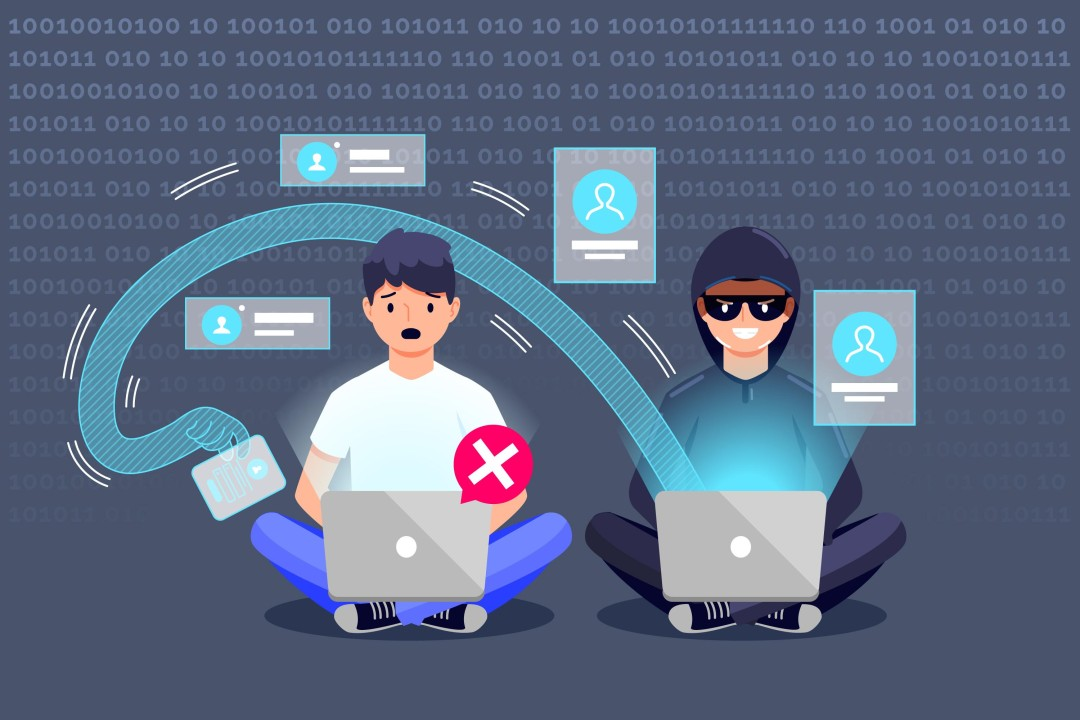
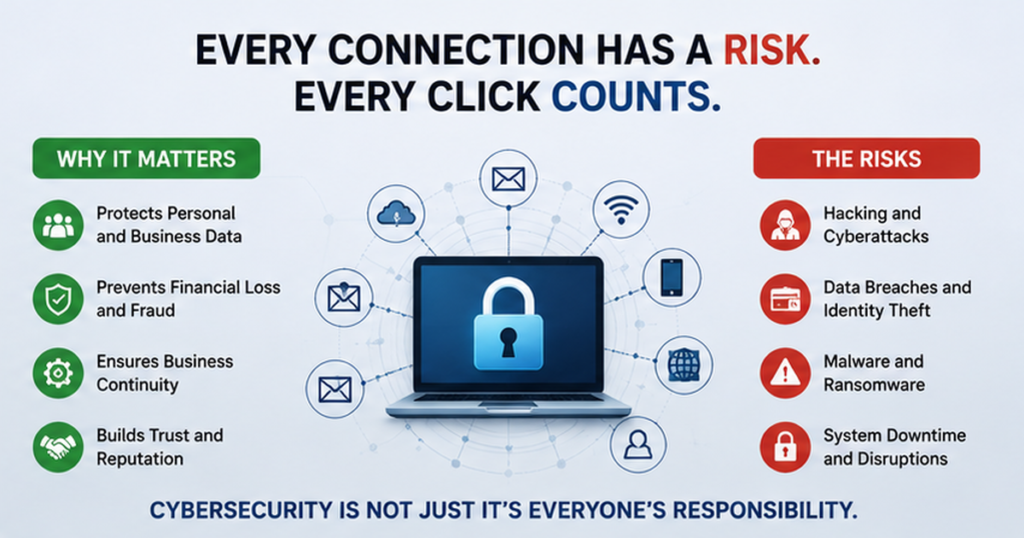
This growing dependence on technology has also created new opportunities for cybercriminals. Personal information, passwords, financial details, business records, and confidential documents can become valuable targets for attackers. A single successful cyberattack can disrupt business operations, compromise private information, damage reputations, and create significant financial losses.
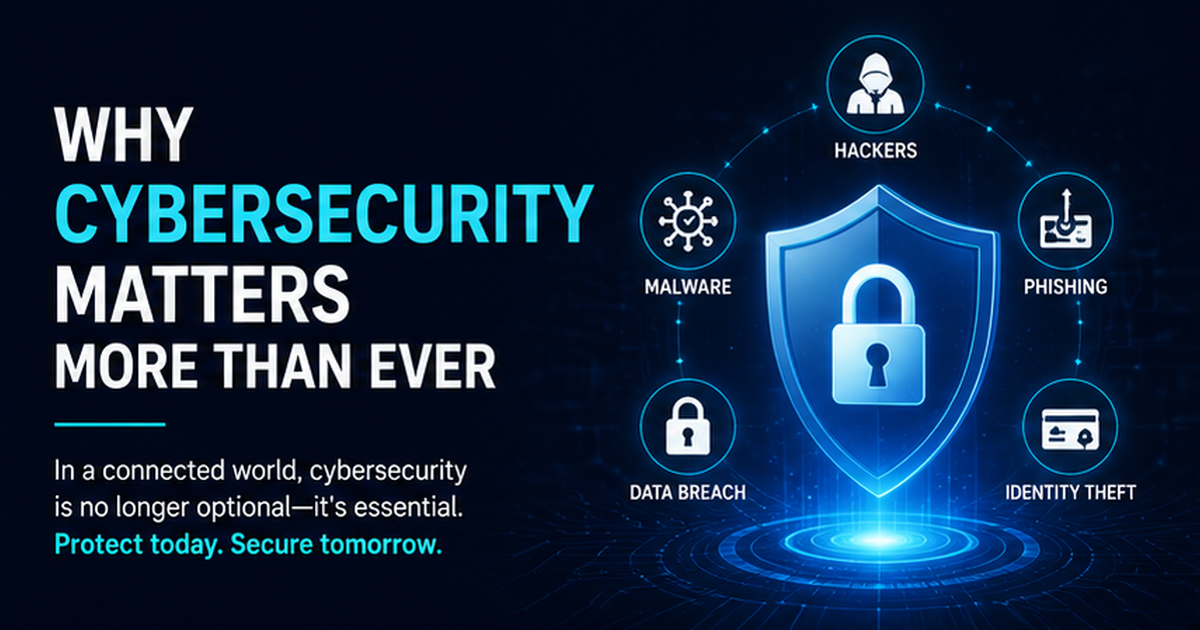
That is why cybersecurity matters more than ever.
Cybersecurity is no longer something that concerns only technology companies or IT professionals. Individuals, schools, hospitals, financial institutions, government organizations, small businesses, and multinational corporations all have information and digital systems that require protection.
As technology continues to advance, understanding cybersecurity and practicing basic digital safety have become essential parts of everyday life.
What Is Cybersecurity?
Cybersecurity refers to the technologies, practices, policies, and processes used to protect computers, networks, applications, devices, and data from unauthorized access, disruption, theft, or damage.
It covers many areas of digital protection, including network security, application security, cloud security, data protection, mobile security, identity management, and incident response.
For an individual, cybersecurity might mean using strong passwords, enabling multi-factor authentication, updating devices, and avoiding suspicious links.
For a company, cybersecurity can involve firewalls, encryption, employee training, access controls, security monitoring, backups, and specialized security teams.
The objective is not simply to prevent hackers from accessing a computer. Modern cybersecurity focuses on protecting the entire digital environment.
Why Cybersecurity Matters More Than Ever
The importance of cybersecurity has increased because technology is now connected to an enormous number of everyday activities.
A few decades ago, many important records existed primarily on paper. Today, personal and business information is often stored digitally and transferred across networks.
Financial transactions happen online. Employees access company systems remotely. Businesses store information in cloud environments. Smartphones contain personal messages, photographs, banking applications, and login credentials.
Every additional digital service can create another potential target if security is not properly managed.
Our Dependence on Technology Is Growing
Technology is no longer optional for many organizations.
Banks depend on digital systems to process transactions. Hospitals use technology to manage patient information and clinical operations. Retail businesses process electronic payments. Governments increasingly provide services through digital platforms.
Even small companies may depend on websites, email, cloud storage, social media, and online payment systems.
If these technologies become unavailable because of a cyberattack, normal operations can be seriously disrupted.
Cybersecurity therefore contributes not only to data protection but also to business continuity and operational stability.
Cybercrime Is Becoming More Sophisticated
Cyber threats continue to evolve.
Attackers increasingly use convincing emails, fake websites, malicious applications, compromised accounts, automated tools, and social engineering techniques to target individuals and organizations.
Some attacks are highly technical. Others exploit simple human mistakes.
For example, an employee may receive an email that appears to come from a manager asking them to open a document. If the message is fraudulent, clicking the link could expose login credentials or install malicious software.
This illustrates an important cybersecurity principle: technology alone cannot eliminate every threat.
People also need cybersecurity awareness.
Personal Data Has Become Extremely Valuable
Personal information is one of the most important assets in the digital economy.
Names, email addresses, phone numbers, passwords, financial details, identity information, browsing activity, and other personal records can be valuable to criminals.
Stolen information may be used for account takeover, identity fraud, phishing, financial scams, or other forms of cybercrime.
This is one reason organizations that collect customer information have a major responsibility to protect it.
Individuals must also understand how much personal information they share online and who can access it.
Protecting Your Digital Identity
A person’s digital identity may include multiple email accounts, social media profiles, financial accounts, cloud storage, shopping accounts, and professional services.
If attackers obtain access to one important account, they may attempt to use it to compromise others.
Using unique passwords for different services is therefore essential.
Password managers can help users create and store strong, unique credentials instead of repeatedly using the same password.
Multi-factor authentication provides another important layer of protection by requiring additional verification beyond a password.
Phishing Remains a Major Cybersecurity Risk
Phishing is one of the most common ways attackers attempt to steal sensitive information.
A phishing message may pretend to come from a bank, delivery company, employer, social media platform, government organization, or another trusted source.
The message often creates urgency.
It might claim that an account will be suspended, a payment has failed, a package cannot be delivered, or immediate verification is required.
The victim is then encouraged to click a fraudulent link or provide confidential information.
How to Recognize Suspicious Messages
Warning signs can include unusual sender addresses, unexpected attachments, urgent requests for passwords, suspicious links, spelling inconsistencies, and requests for sensitive financial information.
However, modern phishing attempts can be extremely convincing.
Users should avoid relying only on appearance.
If an unexpected message asks for important account action, it is safer to access the service through its official application or website rather than clicking the message’s link.
Ransomware Can Disrupt Entire Organizations
Ransomware is a type of malicious software designed to prevent access to systems or data, often through encryption.
Attackers may demand payment in exchange for restoring access.
Modern ransomware incidents can be particularly damaging because attackers may also steal information before disrupting systems.
This can create multiple problems at once: operational downtime, data exposure, recovery expenses, legal concerns, and reputational damage.
Hospitals, businesses, schools, government organizations, and other institutions can all become targets.
Backups Are an Important Defense
Reliable backups are an essential part of cybersecurity planning.
Important information should be backed up regularly, and organizations should ensure that backups can actually be restored when required.
Keeping appropriate backup copies separated from normal production systems can reduce the risk that a single attack destroys both original information and recovery copies.
Backups alone do not prevent ransomware, but they can significantly improve recovery options.
Cybersecurity Is Essential for Businesses
Businesses of every size rely on information.
Customer records, employee information, financial documents, contracts, intellectual property, emails, and internal business plans may all be stored digitally.
A successful cyberattack can cause immediate financial damage while also creating long-term consequences.
Customers may lose confidence in a company that fails to protect sensitive information.
Business partners may also reconsider relationships when weak security creates risks for connected organizations.
Cybersecurity has therefore become part of business risk management rather than simply an IT responsibility.
Small Businesses Are Also at Risk
Some small business owners assume cybercriminals are interested only in large corporations.
That assumption can be dangerous.
Smaller businesses may hold valuable customer and payment information while having fewer security resources than larger organizations.
Basic protections can make an important difference.
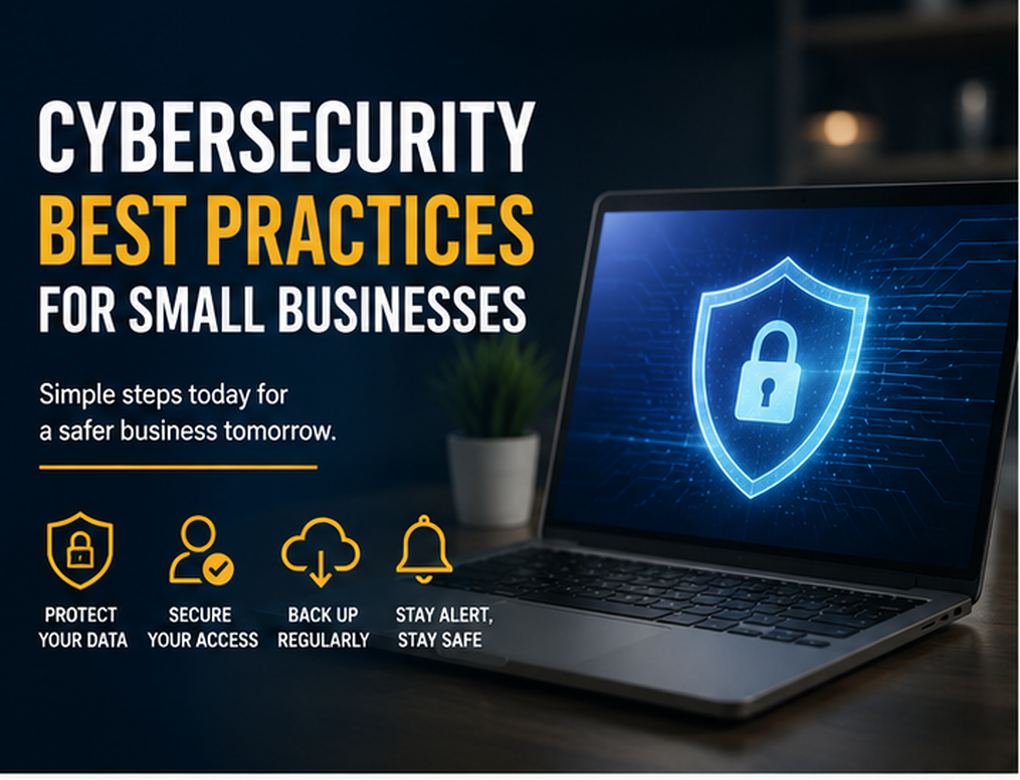
Companies should keep software updated, restrict access to sensitive information, train employees, maintain backups, use strong authentication, and establish a basic plan for responding to security incidents.
Cybersecurity does not always require expensive technology. Strong security often begins with consistent implementation of fundamental practices.
Remote Work Has Created New Security Challenges
Remote and hybrid work have changed how employees access company information.
Workers may connect from homes, hotels, airports, shared offices, or other locations. They may also use laptops, smartphones, cloud applications, and collaboration platforms outside traditional office networks.
This flexibility provides significant benefits, but it also expands the security environment organizations must protect.
Businesses need clear policies for remote access, device security, account protection, software updates, and confidential information.
Employees should also understand the risks of using unsecured networks or leaving work devices unattended.
Cloud Security Is Increasingly Important
Cloud computing allows organizations to store information and operate applications through remote infrastructure.
Cloud services can provide flexibility, scalability, and cost advantages, but security responsibilities do not disappear simply because information is stored in the cloud.
Organizations still need to manage user permissions, authentication, configuration, data protection, and monitoring.
A poorly configured cloud environment can expose sensitive information even when the underlying cloud platform itself has strong security controls.
Understanding shared security responsibilities is therefore an important part of modern cloud adoption.
Smartphones Need Cybersecurity Too
Smartphones contain enormous amounts of personal information.
Emails, photographs, contacts, messages, banking applications, authentication apps, location information, and work documents may all be accessible from a single mobile device.
This makes smartphone security extremely important.
Users should keep operating systems updated, use secure screen locks, download applications from trusted sources, review app permissions, and avoid suspicious links.
Remote device location and data-erasure features can also be useful if a phone is lost or stolen.
Social Media and Cybersecurity
Social media can reveal more information than users realize.
Public profiles may expose birthdays, workplaces, family relationships, travel plans, locations, and personal interests.
Cybercriminals can potentially use publicly available information to create more convincing scams.
For example, an attacker who knows where someone works may create a message pretending to come from a colleague or company department.
Users should regularly review social media privacy settings and think carefully before publicly sharing sensitive personal information.
Artificial Intelligence Is Changing Cybersecurity
Artificial intelligence is rapidly influencing both cyber defense and cyber threats.
Security teams can use AI-powered tools to analyze large volumes of activity, identify unusual patterns, prioritize alerts, and detect certain suspicious behaviors.
Automation can help organizations respond more quickly to potential threats.
However, attackers can also use AI.
Generative AI may help criminals create more convincing phishing messages, automate fraudulent interactions, or produce deceptive content.
Deepfakes and Digital Fraud
AI-generated audio, images, and videos create another cybersecurity challenge.
Deepfake technology can imitate a person’s appearance or voice with increasing realism.
This can potentially be used in impersonation scams.
For example, criminals might attempt to imitate a senior employee and request an urgent payment.
Organizations may therefore need verification procedures that do not depend solely on voice, video, or a single communication channel.
The Internet of Things Expands Cyber Risks
The Internet of Things, commonly known as IoT, includes connected devices such as smart cameras, televisions, home assistants, industrial sensors, appliances, and other internet-enabled equipment.
Each connected device can potentially become part of an organization’s or household’s cybersecurity environment.
Weak passwords, outdated software, or poor configuration can create vulnerabilities.
Users should change default passwords where possible, install security updates, and disable unnecessary features.
Manufacturers also have a responsibility to design connected products with stronger security protections.
Cybersecurity and Online Banking
Online banking and digital payment systems have made financial services significantly more convenient.
However, financial accounts are attractive targets for criminals.
Users should enable strong authentication, avoid sharing verification codes, monitor transactions, and be suspicious of messages requesting account credentials.
Banks generally do not need customers to disclose passwords or one-time security codes through unsolicited messages.
If a financial request seems suspicious, contacting the institution through an official channel is safer than responding directly.
Human Error Remains a Major Security Challenge
Many security incidents involve human decisions.
An employee may reuse a password, click a fraudulent link, accidentally send confidential information to the wrong person, or ignore a software update.
This does not mean employees should simply be blamed for cybersecurity problems.
Organizations should design systems and training programs that make secure behavior easier.
Regular awareness training can help employees recognize phishing, protect credentials, report suspicious activity, and understand how their actions affect organizational security.
Essential Cybersecurity Practices
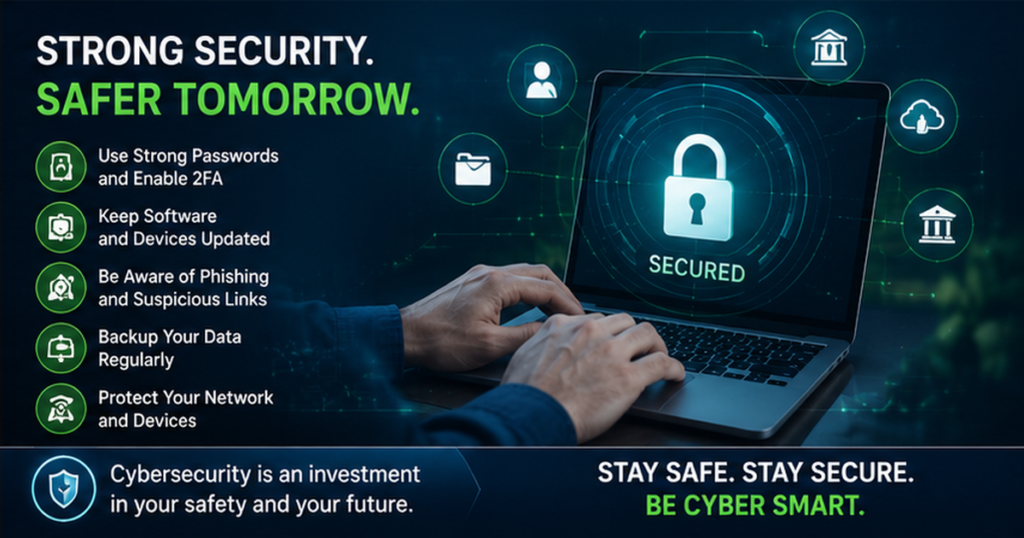
Individuals and organizations can reduce many common risks by following a combination of basic security practices:
- Use long, unique passwords for important accounts.
- Enable multi-factor authentication whenever possible.
- Keep operating systems, browsers, and applications updated.
- Back up important information regularly.
- Avoid clicking unexpected or suspicious links.
- Download software only from trusted sources.
- Limit access to sensitive data.
- Review account activity for unusual behavior.
- Secure smartphones and laptops with strong screen locks.
- Verify unusual financial or confidential requests through another trusted channel.
Cybersecurity is strongest when multiple protective measures work together.
Cybersecurity and Privacy
Cybersecurity and privacy are related but not identical.
Cybersecurity focuses largely on protecting information and systems from unauthorized access, disruption, and misuse.
Privacy focuses on how personal information is collected, processed, stored, shared, and controlled.
An organization may have technically secure systems while still collecting more personal information than necessary.
Responsible digital organizations therefore need to consider both cybersecurity and privacy.
Data should be protected, but organizations should also be transparent about why information is collected and how it is used.
The Cost of Ignoring Cybersecurity
Poor cybersecurity can create consequences far beyond repairing computers.
Organizations may experience financial losses, operational downtime, customer complaints, legal expenses, data recovery costs, and reputational damage.
In serious cases, companies can lose important intellectual property or confidential business information.
Individuals can experience financial fraud, stolen accounts, identity misuse, or loss of personal files.
Preventive security measures are therefore often far less costly than recovering from a major incident.
Future Trends in Cybersecurity
Cybersecurity will continue evolving alongside technology.
Artificial intelligence will play a larger role in detecting threats and automating security processes. Organizations will increasingly focus on identity protection as employees access information from different locations and devices.
Cloud security will remain a major priority as businesses continue moving services online.
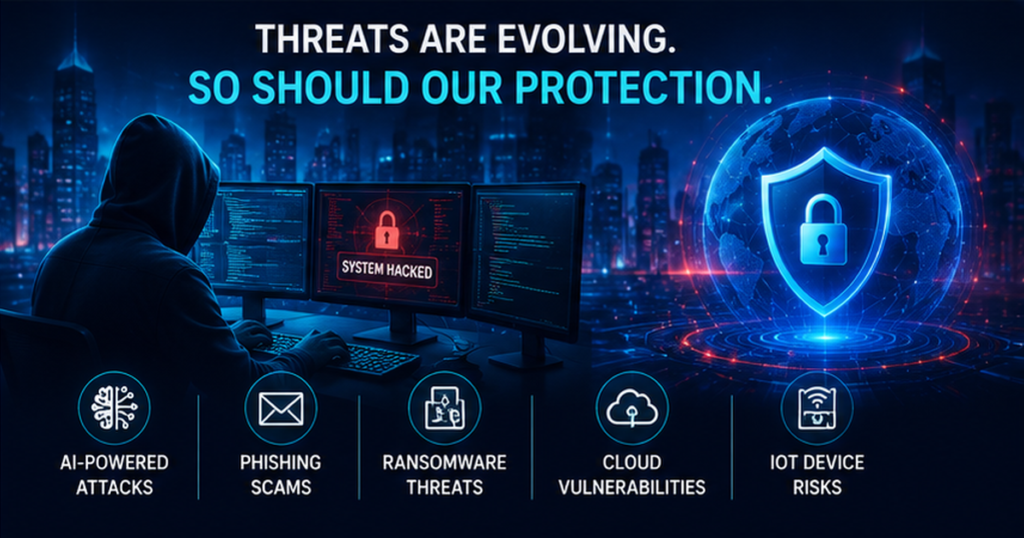
Security teams will also need to prepare for increasingly sophisticated social engineering, AI-generated scams, connected-device vulnerabilities, and emerging technologies.
Zero Trust Security
One important cybersecurity approach is known as Zero Trust.
Traditional security models sometimes assumed that users or devices inside an organization’s network could automatically be trusted.
Zero Trust takes a different approach.
Users and devices should be appropriately verified before accessing important resources, and access should generally be limited to what is necessary.
This approach can be valuable in modern environments where employees, applications, and information are distributed across cloud platforms and remote locations.
Building a Stronger Cybersecurity Culture
Cybersecurity should become part of everyday digital culture.
For individuals, this means learning basic security habits and staying alert to common scams.
For organizations, it means treating cybersecurity as a shared responsibility across leadership, IT teams, employees, and business departments.
Strong cybersecurity culture encourages people to report suspicious activity quickly rather than hiding mistakes.
Organizations should also regularly review security practices because threats and technologies change over time.
Security is not a task that can be completed once and forgotten.
Conclusion
Understanding why cybersecurity matters more than ever is essential in a world increasingly dependent on digital technology.
People store personal information online, businesses operate through cloud platforms, employees work remotely, financial transactions happen digitally, and smartphones provide access to some of our most important accounts.
At the same time, cybercriminals continue developing new methods involving phishing, ransomware, social engineering, account theft, malicious software, and AI-assisted deception.
Cybersecurity cannot eliminate every digital risk, but effective protection can dramatically reduce exposure and improve recovery when incidents occur.
Strong passwords, multi-factor authentication, regular updates, reliable backups, cybersecurity awareness, careful data handling, and responsible online behavior provide a strong foundation.